slider
ABOUT US

Advancing Safety, Sustainability, and Excellence in Dry Bulk Shipping

Representing quality dry cargo shipowners at the IMO and beyond since 1980

LEARN MORE
Mission

Mission

We aim to unite and promote quality dry bulk shipping through collaboration, by advancing the highest standards of safety, operational excellence, environmental stewardship, and sustainability in ship operations, and by supporting the consistent and effective implementation of regulatory and industry frameworks for the benefit of a safe, efficient, and sustainable global dry bulk sector.

Vision & Principles

Provide leadership, advocacy, and services that add tangible value across the global dry bulk shipping sector by amplifying INTERCARGO members’ voice, operational and reputational success, in accordance to the following principles.

Role

Role

The Chairman of INTERCARGO since 1 January 2025 is Mr. John A. Xylas.

INTERCARGO’s Members predominantly operate Bulk Carriers in the international dry bulk trades, such as coal, grain, iron ore and other bulk commodities. INTERCARGO’s main role is to work with our Members, the Regulators and other Shipping Associations to ensure that shipping operates safely, efficiently, and in an environmentally sound way. INTERCARGO actively participates in the development of global legislation through the International Maritime Organization and other international bodies.

Navigating the Broader Sustainability Challenge in Dry Bulk Shipping

Navigating the Broader Sustainability Challenge in Dry Bulk Shipping

Sustainability remains INTERCARGO’s overarching mandate, underpinned by an unwavering commitment to quality and collaborative initiatives that raise standards across the dry bulk shipping sector.

The dry bulk shipping sector stands at the crossroads of multiple, converging sustainability imperatives. INTERCARGO will continue to raise the bar on safety, environmental responsibility, operational excellence, and governance with the need for genuine and active engagement of all maritime cluster stakeholders as well as the safety, well-being, and professional development of seafarers at the core of its initiatives and advocacy.

Strengthening Collaboration and Global Alignment

Strengthening Collaboration and Global Alignment

INTERCARGO will continue to strengthen collaboration across the dry bulk shipping sector. Addressing global and interconnected challenges, ranging from sustainability and environmental stewardship to safety and operational excellence, requires coordinated, pragmatic, and inclusive approaches.

At the regulatory level, INTERCARGO will continue to advocate for pragmatic, globally consistent decarbonisation strategies, ensuring that any energy transition remains safe, technologically sound, and economically viable.

In this context, our Association will continue to support the International Maritime Organization (IMO) as the sole global regulator and advocate for cooperative, clear, and fair global solutions.

Collaboration Beyond the Sector’s Boundaries

Collaboration Beyond the Sector’s Boundaries

Globally, the sustainability transition is entering a period of turbulence. Political uncertainty, regulatory fragmentation, and corporate hesitation risk derailing progress. The danger lies in a “disorderly transition,” where ambition outpaces coordination. The dry bulk sector must therefore champion policy stability, pragmatic regulation, and collaborative governance, working with IMO, governments, and industry actors to avoid an uncoordinated, commercially disruptive path.

Success will depend on working together across all levels of the industry and beyond its traditional boundaries to share knowledge, develop expertise, and drive initiatives that deliver measurable improvements in safety, operational excellence, and sustainability.

INTERCARGO is committed to safety and quality in ship operations, with a focus on operational efficiency and the protection of the marine environment.

INTERCARGO encourages the adoption of a zero tolerance policy regarding illegal wildlife trade and would also support in its capacity:

  • information sharing and detection
  • practical measures to stop the transportation of illegal wildlife product
  • new mechanisms tackling illegal wildlife trade
HISTORY & MILESTONES

1978–1992: Foundations & Vision

1978–1992: Foundations & Vision
1978

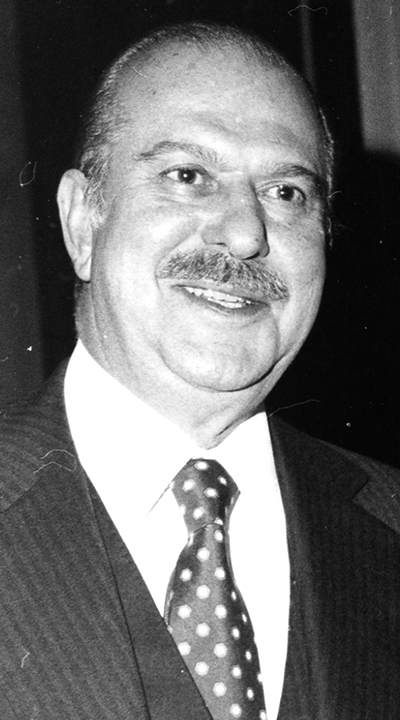
In 1978, Anthony Chandris a visionary shipowner and diplomat recognised that the dry bulk shipping industry needed a united, international voice independent of any singe nation.

April 23, 1980

INTERCARGO was established to prove a unified international platform to tackle dry bulk shipping challenges, exceeding expectations with over 1,000 ships in its ranks.

1991

INTERCARGO began influencing port operations with the adoption of a regional resolution on Port State Control, enhancing inspection standards across member states.

1993–2000: Recognition & Regulation

1993–2000: Recognition & Regulation
1993

A milestone year: INTERCARGO was granted IMO consultative status, formalizing its voice at the international level. That same year, major regulatory frameworks like the Enhanced Survey Guidelines and the ISM Code were adopted to improve ship safety and operational standards.

1996

The Enhanced Survey Programme became mandatory, standardizing inspection protocols for aging bulk carriers to improve safety and vessel integrity.

1997

Bulk carrier loading safety advanced with the adoption of the Code of Practice for the Safe Loading and Unloading of Bulk Carriers and the formal introduction of the BLU Code. Meanwhile, IACS introduced Unified Requirements (URs) to streamline classification standards.

1999

A new SOLAS Chapter XII was adopted, specifically addressing structural safety requirements for bulk carriers to prevent casualties and losses.

2001–2009: Consolidation & Cooperation

2001–2009: Consolidation & Cooperation
2001

INTERCARGO joined forces with other maritime bodies to co-found the Round Table of International Shipping Associations, enhancing industry collaboration and policy alignment.

2002

Security took center stage with the adoption of the International Ship and Port Facility Security (ISPS) Code, introducing global standards to safeguard ships and port infrastructure.

2005

IACS adopted the Common Structural Rules (CSR) for bulk carriers and tankers, ensuring consistency and safety in hull construction across the fleet.

2006

The adoption of the Maritime Labour Convention (MLC) marked a major advancement in crew welfare, defining global minimum standards for living and working conditions aboard ships.

2008

New standards for protective coatings on ship structures were adopted, contributing to improved corrosion resistance and longer vessel lifespans.

2010–2016: Modernization & Compliance

2010–2016: Modernization & Compliance
2010

The Goal-Based Ship Construction Standards (GBS) were formally adopted by IMO, promoting safety-by-design in shipbuilding. That year also saw the enforcement of new SOLAS regulations to support the GBS framework.

2011

The IMSBC Code (International Maritime Solid Bulk Cargoes Code) entered into force, establishing clearer guidelines for the safe carriage of solid bulk cargoes.

2016

INTERCARGO’s long-term advocacy culminated in IACS confirming that its Common Structural Rules complied with the IMO’s Goal-Based Standards, marking a major step in harmonizing ship design with regulatory expectations.

January 10, 2020

Publication of INTERCARGO – The First 40 Years

Round Table

The Round Table of international shipping associations consists of: