Greenhouse gas (GHG) reduction is a top priority for the global shipping industry as it strives to align with international climate goals and regulatory requirements.

NEW FEATURE

Decarbonization & Technology Solutions Portal

Connecting shipowners with decarbonization and technology innovators Go to Decarbonization Portal

We’re proud to launch the Decarbonization & Technology Solutions Portal — a dedicated space for INTERCARGO members to explore decarbonization solutions and innovative technologies, connect with Associate Members offering sustainable solutions, and stay informed on the latest tools supporting a greener future for dry bulk shipping.

  • GREENHOUSE GAS EMISSIONS
  • ENERGY EFFICIENCY OF SHIPS

Greenhouse gas (GHG) reduction is a top priority for the global shipping industry as it strives to align with international climate goals and regulatory requirements. The IMO’s Initial GHG Strategy sets ambitious targets, including a 40% reduction in carbon intensity by 2030 and a 50% absolute reduction in GHG emissions by 2050 compared to 2008 levels. Key measures to achieve these targets include the Energy Efficiency Existing Ship Index (EEXI), the Carbon Intensity Indicator (CII), ongoing work on the Life Cycle GHG Intensity Assessment (LCA) Framework, and the development of mid- and long-term solutions such as alternative fuels, carbon capture, and market-based mechanisms.

IMO Developments
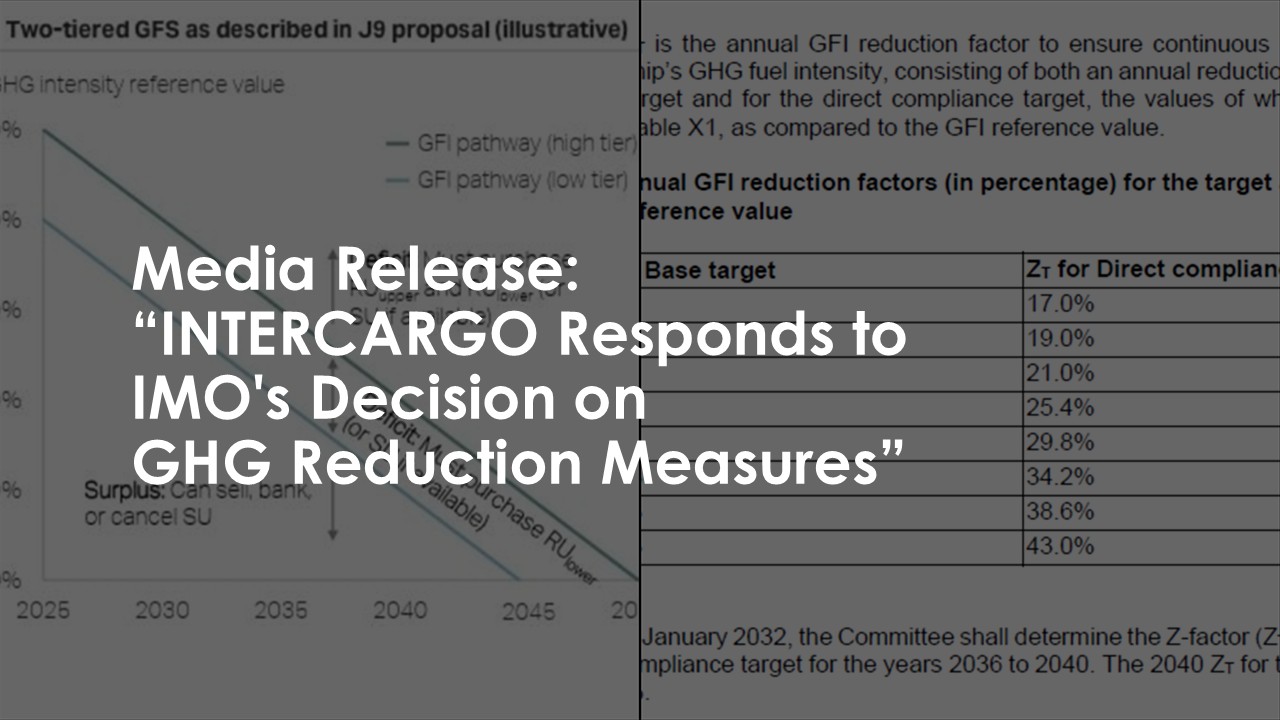
INTERCARGO is actively engaged in IMO discussions on global measures to reduce GHG emissions from shipping. The association contributes to the development of the IMO’s Mid-Term Measures and Net-Zero Framework, including work on the Life Cycle GHG Intensity Assessment (LCA) Framework. INTERCARGO also closely follows the Fifth IMO GHG Study (2018–2023), the measurement and verification of non-CO₂ GHG emissions, and the assessment of emerging technologies such as ship-based carbon capture, with a particular focus on their operational impact for bulk carriers.

EU and Other Regional Developments
INTERCARGO monitors regional and national GHG-related measures affecting dry bulk shipping, including the EU Emissions Trading System (EU ETS), FuelEU Maritime, and the UK Emissions Trading System (UK ETS). The association also tracks emerging regional initiatives, such as sovereign carbon pricing schemes and related mechanisms in regions including Africa, to ensure members are informed and prepared for evolving regulatory requirements.

Energy efficiency of ships is a central focus of international maritime regulation and industry best practice, driven by the urgent need to reduce greenhouse gas (GHG) emissions and support global decarbonisation goals. Key regulatory measures include the Energy Efficiency Existing Ship Index (EEXI) and the Carbon Intensity Indicator (CII), both introduced by the IMO under MARPOL Annex VI. These frameworks require ships to meet specific design and operational efficiency standards, report fuel consumption and carbon intensity, and adopt new technologies and operational strategies to reduce emissions. The industry is also exploring alternative fuels, shore power, and digital tools to further enhance efficiency and sustainability. NTERCARGO is actively engaged in the development and ongoing review of the IMO’s energy efficiency framework for ships, with a strong focus on ensuring that measures are technically robust, operationally realistic, and appropriate for the dry bulk sector.

The Association contributes to policy and technical discussions related to the Carbon Intensity Indicator (CII), the IMO Data Collection System (DCS), the Energy Efficiency Design Index and Existing Ship Index (EEDI/EEXI), and the Ship Energy Efficiency Management Plan (SEEMP). Through evidence-based input and close cooperation with its Members, INTERCARGO seeks to promote fair implementation, address unintended consequences, and support continuous improvement in the energy efficiency of bulk carriers.