TOPICS & ISSUES

Safety & Technical

INTERCARGO actively monitors the development of rules and guidelines for bulk carriers and associated on-board equipment on a continuous basis, with a particular emphasis on the Common Structural Rules Bulk Carriers and Oil Tankers.

  • DESIGN/CONSTRUCTION
  • MASS & DIGITALIZATION
  • CLASS & STATUATORY SURVEYS
  • LIFE SAVING
  • INCIDENTS & CASUALTY REPORTING

INTERCARGO actively monitors the development of rules and guidelines for bulk carriers and associated on-board equipment on a continuous basis, with a particular emphasis on the Common Structural Rules Bulk Carriers and Oil Tankers.

Class and Statutory Rules
The Common Structural Rules for Bulk Carriers and Oil Tankers (CSR) conform with SOLAS Regulation II-1/3-10 Goal-based ship construction standards for bulk carriers and oil tankers and thus provide a defined minimum level of safety in terms of vessel design and construction.

Part of the maintenance and further development of the CSR includes periodic rule changes that usually occur yearly, and INTERCARGO takes an active role in the rule change process.
INTERCARGO is currently participating with IACS and other industry partners with a review of the recently revised IACS Recommendation 34 – Standard Wave Data.
In addition to involvement with the CSR, INTERCARGO’s Secretariat and members of the Management Committee sit on a number of the individual Class Societies committees and provide input to other Class Rules related to the design and construction of ships, with an emphasis on those matters related to bulkers.

Cargo Gear
INTERCARGO is concerned that some of the onboard cranes now being supplied are not suitable for purpose and thus stresses the importance of good design, fabrication and construction of cargo gear and onboard cranes.

Hatch Covers
Hatch covers perform the vital role of preventing water from entering the cargo holds and thus protect the cargo. The updates on this page provide information from various sources including manufacturers and P&I Clubs

Steering Gear
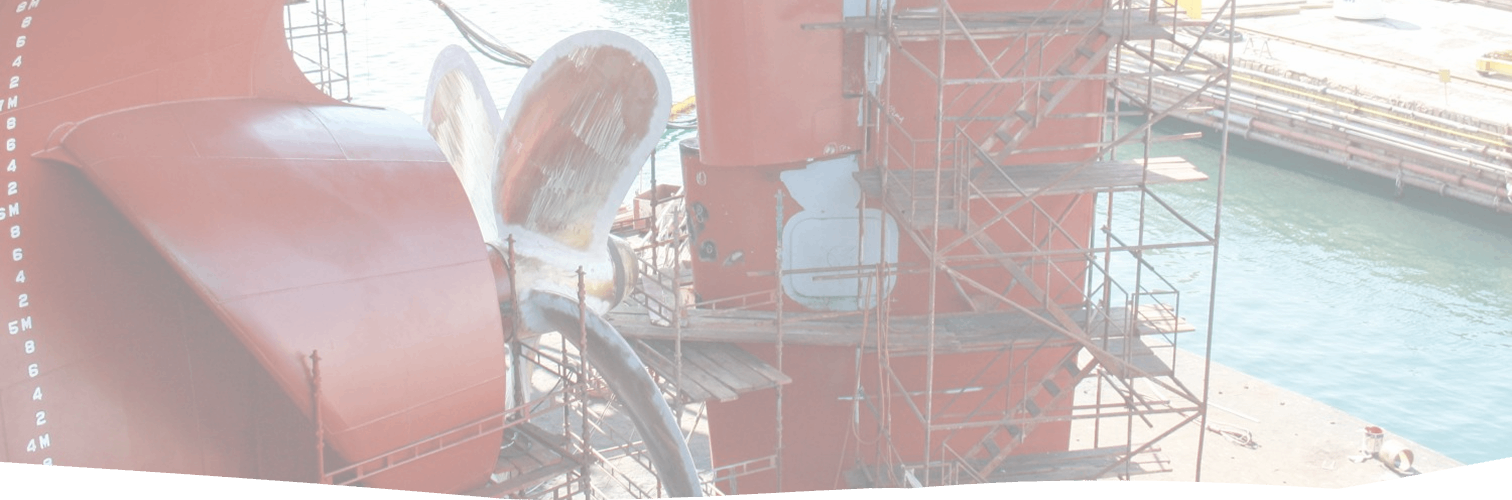
SOLAS requirements for steering and propulsion were developed some time ago, mainly based on the system of a single propeller and rudder, the standard system design of that time. Since then, steering systems have undergone a development process and today's modern propulsion/steering systems are completely different to the traditional type, such as azimuth thrusters, podded propulsors, waterjets, cycloidal propellers, etc. Therefore, current safety standards of SOLAS for steering and propulsion are not directly applicable to these non-traditional types.

To take into account the non-traditional steering gear, the IMO (at SDC) has been developing new goal based regulations to replace (for new vessels only) the existing prescriptive regulations.

At SDC 11 (January 2025) , draft text for the regulations has been produced however the Sub-Committee was of the view that before the regulations could be further developed information related to ships manoeuvrability needs to be submitted and considered.

Currently Class and statutory steering gear requirements for Tankers are more stringent than those for Bulkers (and other vessel types) - SOLAS Chapter II-1, Part C - Machinery Installations, Regulation 29 – Steering Gear. INTERCARGO is of the view that Bulker requirements should be at the same level as the Tanker requirements.

Anchoring
INTERCARGO is actively engaged in promoting the safety and operational excellence of anchoring practices within the dry bulk shipping sector. Through participation in joint industry working groups, conducting member surveys on anchoring incidents, and providing feedback to regulatory bodies such as the International Association of Classification Societies (IACS), INTERCARGO works to improve anchoring equipment standards and operational procedures. The association also serves as a hub for sharing best practices and operational experiences among its members, ensuring that concerns related to anchoring are addressed at both industry and regulatory levels. This collaborative approach helps drive continuous improvement in anchoring safety and efficiency for dry bulk carriers worldwide


Equipment & Suppliers
INTERCARGO plays an active role in addressing equipment and supplier issues that impact the dry bulk shipping sector. Through its Technical Committee and Executive Committee meetings, INTERCARGO provides a platform for members to share experiences and concerns regarding equipment reliability, supplier performance, and the availability of critical spare parts—particularly for Alarm and Monitoring Systems (AMS) required for Unattended Machinery Spaces (UMS). The recurring challenge of spare parts shortages for these essential systems has been highlighted as a significant operational concern.
Recognizing that equipment supply chain issues, system redundancy, and failures can directly affect vessel safety and regulatory compliance, INTERCARGO regularly includes these topics on its agenda and communicates member feedback to relevant industry stakeholders to drive improvements in standards and support.
INTERCARGO is also actively engaged in ballast water management, conducting and publishing operational surveys in collaboration with organizations such as MARTECMA, BEMA, and INTERTANKO. The association participates in IMO working groups and correspondence groups focused on the Ballast Water Management (BWM) Convention, co-sponsoring submissions on key issues like operations in challenging water quality. These efforts ensure that operational challenges, regulatory compliance, and equipment performance related to ballast water systems are addressed at both industry and regulatory levels.
These examples clearly demonstrate INTERCARGO’s commitment to identifying, discussing, and escalating equipment and supplier-related challenges, ultimately promoting safer, more reliable, and compliant dry bulk shipping operations.
The shipping industry is undergoing rapid transformation through digitalisation and the emergence of Maritime Autonomous Surface Ships (MASS). Recent developments include the ongoing work at the IMO to develop the MASS Code, which will set international standards for the safe operation, manning, and oversight of autonomous vessels. At the same time, the sector is embracing new digital tools and platforms for navigation, data exchange, satellite communications, and operational efficiency, while also addressing the growing importance of cyber resilience and data security.

INTERCARGO is actively involved in these developments, representing the interests of dry bulk shipowners in international forums and industry working groups. The association participates in the IMO’s MASS Code deliberations, contributes to the IACS/Industry Joint Working Group on Safe Digital Transformation, and regularly updates its members on best practices, regulatory changes, and the adoption of new digital technologies. INTERCARGO’s engagement ensures that the unique needs and operational realities of the dry bulk sector are reflected in the global digitalisation and automation agenda.

The Enhanced Survey Programme (ESP) is fundamental to ensuring the safety and integrity of bulk carriers through rigorous class and statutory survey requirements. Recent developments in the industry include the integration of Remote Inspection Techniques (RITs)—such as drones and remote cameras—into the ESP framework. The IMO has approved amendments to the ESP Code to permit the use of these technologies as alternatives to traditional close-up surveys, with formal adoption expected in 2026. These advancements are designed to enhance safety, efficiency, and flexibility in ship inspections while maintaining the high standards required for vessel compliance.

INTERCARGO is actively engaged in international regulatory developments and industry best practices related to class and statutory surveys for bulk carriers. The association represents the interests of dry bulk shipowners at the IMO and in collaboration with IACS, ensuring that the practical realities of vessel operation are reflected in survey requirements. INTERCARGO has supported and provided input on the ESP Code amendments, regularly updates its members on these developments, and advocates for harmonized, practical, and safe implementation of both traditional and remote survey methods across the dry bulk sector.

INTERCARGO is deeply committed to the continuous improvement of safety standards for rescue boats, fire fighting, and lifesaving equipment on bulk carriers. The association actively participates in international regulatory forums, such as the IMO and the Industry Lifeboat Group (ILG), to address critical issues related to the design, maintenance, and operation of lifesaving appliances. INTERCARGO has co-sponsored submissions to the IMO on the development of design and prototype test requirements for free-fall lifeboat release systems and has contributed to the revision of SOLAS and LSA Code requirements, including new standards for the maintenance, examination, and operational testing of lifeboats and rescue boats.

INTERCARGO also monitors and provides input on amendments to the LSA Code, such as the adoption of new ventilation requirements for totally enclosed lifeboats and updated prototype tests for lifeboats and rescue boats. The association works closely with industry partners to address recurring safety concerns, such as accidents during lifeboat drills and the need for safer operational procedures. Through its Technical Committee and ongoing engagement with IMO sub-committees, INTERCARGO ensures that the operational realities and safety needs of dry bulk shipping are represented in the ongoing improvement of lifesaving and fire safety standards.

INTERCARGO is dedicated to advancing safety in the dry bulk sector by promoting transparency, learning from incidents, and driving continuous improvement in casualty reporting and crew safety. Learning lessons from incidents and casualties, and sharing experiences, have proven to be effective approaches to raising safety awareness and are vital to deepening understanding and knowledge of existing rules, regulations, and skills. Continued focus on safety awareness and safety measures helps to close gaps in understanding and reduces the potential for similar casualties involving bulk and ore carriers.

Despite these efforts, there is often a significant delay between the submission of accident investigation reports and their public availability. INTERCARGO observes that some investigations focus only on immediate causes, lacking a thorough root cause analysis. The association advocates for bold changes in ship design and calls on flag states to question and, where necessary, amend existing SOLAS, MARPOL, LOADLINE, and IMSBC Codes to further improve crew safety and vessel survivability.

Every year, the INTERCARGO Bulk Carrier Casualty Report provides a detailed analysis of casualty statistics covering the previous decade. For the period 2015–2024, 20 bulk carriers over 10,000 dwt were lost, resulting in 89 seafarer fatalities. Cargo liquefaction remains the most significant contributor to loss of life, accounting for 61.8% of fatalities, while grounding is the leading cause of ship losses. Encouragingly, statistics since 1994 show a clear trend of improvement in safety performance, with the average life loss per ship casualty steadily decreasing. However, INTERCARGO stresses that there is no room for complacency and continues to push for enhanced measures to address cargo safety and safe navigation.

INTERCARGO is also proactive in addressing enclosed space entry risks, participating in industry forums and IMO working groups, and supporting the development of best practices and regulatory amendments. The association collaborates with technology providers, such as Vistrato, to trial and support innovative solutions like Dry Bulk Buddy—a training and compliance support system designed to enhance crew awareness and practical access to safety-critical knowledge, particularly for enclosed space entry and other high-risk operations.

Through these initiatives, INTERCARGO ensures that the operational realities and safety needs of dry bulk shipping are represented at the highest levels, driving continuous improvement in incident prevention, casualty reporting, and crew safety.